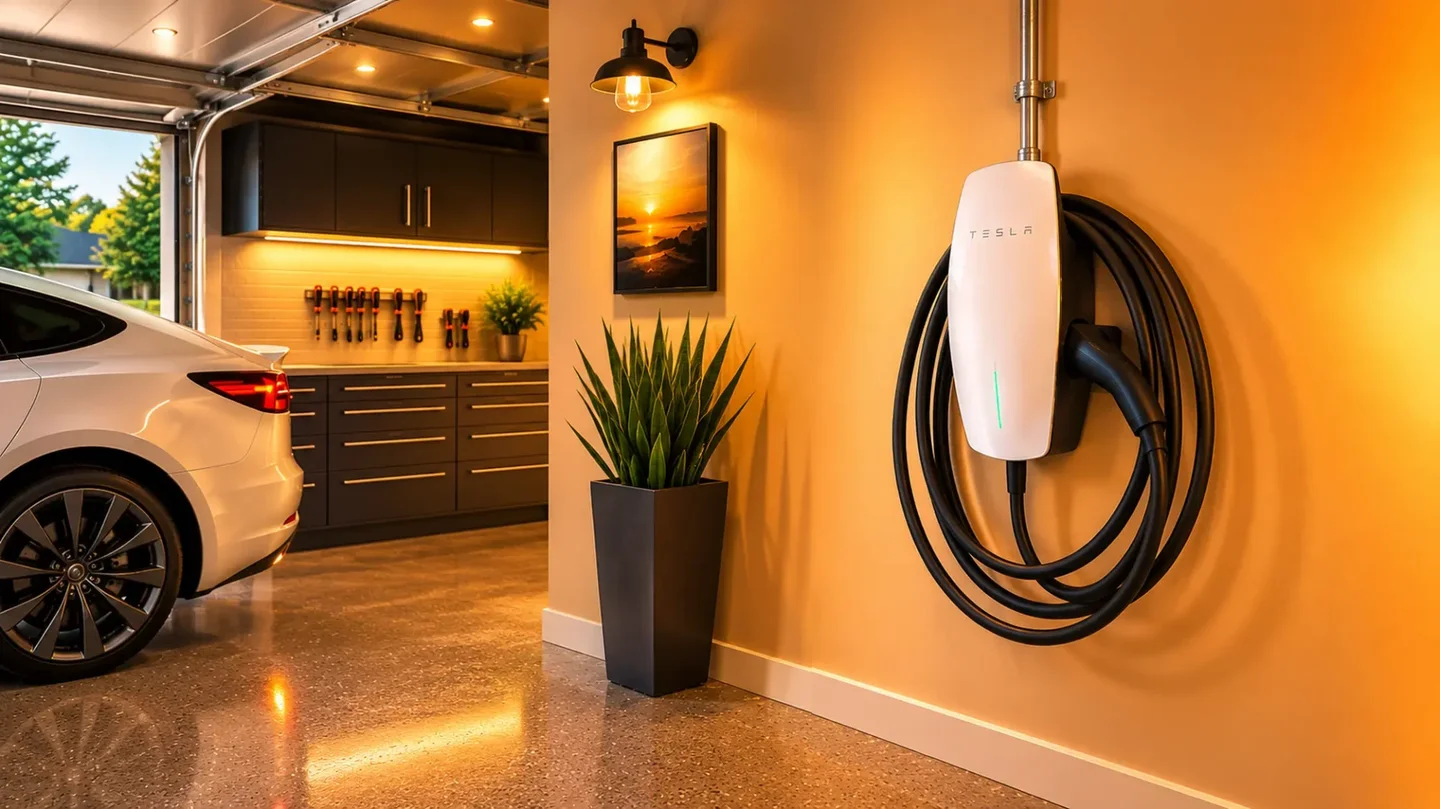
EV Charger Installation • Loganville GA

Tesla Wall Connector and Level 2 Charger Installation in Loganville, GA

Get a free EV charger quote with a panel inspection. Kais Pro Repairs installs Tesla Wall Connectors and Level 2 home chargers with proper load calculation, correct wire sizing, clean routing, safe setup, and real local EV charger proof.

We help Loganville homeowners avoid costly EV charger mistakes before the breaker goes in: wrong wire size, overloaded panels, dryer outlet shortcuts, 50 amp versus 60 amp guessing, loose terminations, and chargers that trip because the installation was not evaluated correctly.

Tesla Wall Connector Specialist Level 2 Home Chargers 50 Amp vs 60 Amp Planning Hardwired or Plug In
4.9 Google Rating Local homeowner trust built through clean electrical work and clear communication.
1.3K Jobs Completed Residential electrical repair, EV charging, lighting, panel, and troubleshooting work.
Free Panel Inspection + EV Quote We review the panel, charger, route, and charging goal before recommending 50 amp, 60 amp, hardwired, or plug-in options.
Clean Workmanship Neat routing, supported wiring, organized panels, and a finished look homeowners can trust.
What Homeowners need to know

Most EV Charger Pages Skip the Part That Actually Matters

The charger brand is only one piece of the job. A safe installation depends on the home’s electrical panel, available capacity, conductor size, breaker size, wiring method, route distance, charger settings, and the homeowner’s real charging needs.

That is why Kais Pro Repairs does not start with “Do you want 50 amps or 60 amps?” We start with the house, the panel, the route, the charger, and the way you actually use the vehicle.

Do not choose the breaker size first.

A bigger breaker is not a charging-speed upgrade by itself. The breaker, wire, charger, panel capacity, installation method, and charger configuration must match. If one part is wrong, the result can be nuisance tripping, overheating, charger faults, damaged wiring, or a failed inspection.

Start with our 50 amp vs 60 amp EV charger guide if you are comparing circuit sizes before scheduling.

EV Charging Resource Hub

Use This Page as the Main EV Charger Hub

These related pages answer the questions homeowners search before they call: 50 amp vs 60 amp, hardwired vs plug-in, charger faults, Tesla Wall Connector planning, and what to know before installing a charger. This page ties those EV resources together around the main service page.

What We Install

EV Charger Installation Services for Homeowners Who Want It Done Right

Whether you already bought the charger or you are still deciding what to buy, we help match the installation to the equipment, the panel, and the way you charge.

Hardwired Level 2 Chargers

Clean permanent installations for chargers like Tesla Wall Connector, Tesla Universal Wall Connector, Emporia, ChargePoint, Wallbox, Autel, and similar EVSE units.

Compare hardwired vs plug in setups

240V EV Charger Outlets

Dedicated EV outlets where a plug-in setup makes sense. We do not treat an EV outlet like a casual dryer outlet replacement. The receptacle, breaker, wire, and torque matter.

Read the installation planning guide

Panel and Circuit Planning

Breaker space alone does not prove the panel can support a charger. We review the panel, route, circuit size, and charging goal before building the circuit.

See 50 amp vs 60 amp planning

Tired of Waiting on Slow 120‑Volt EV Charging

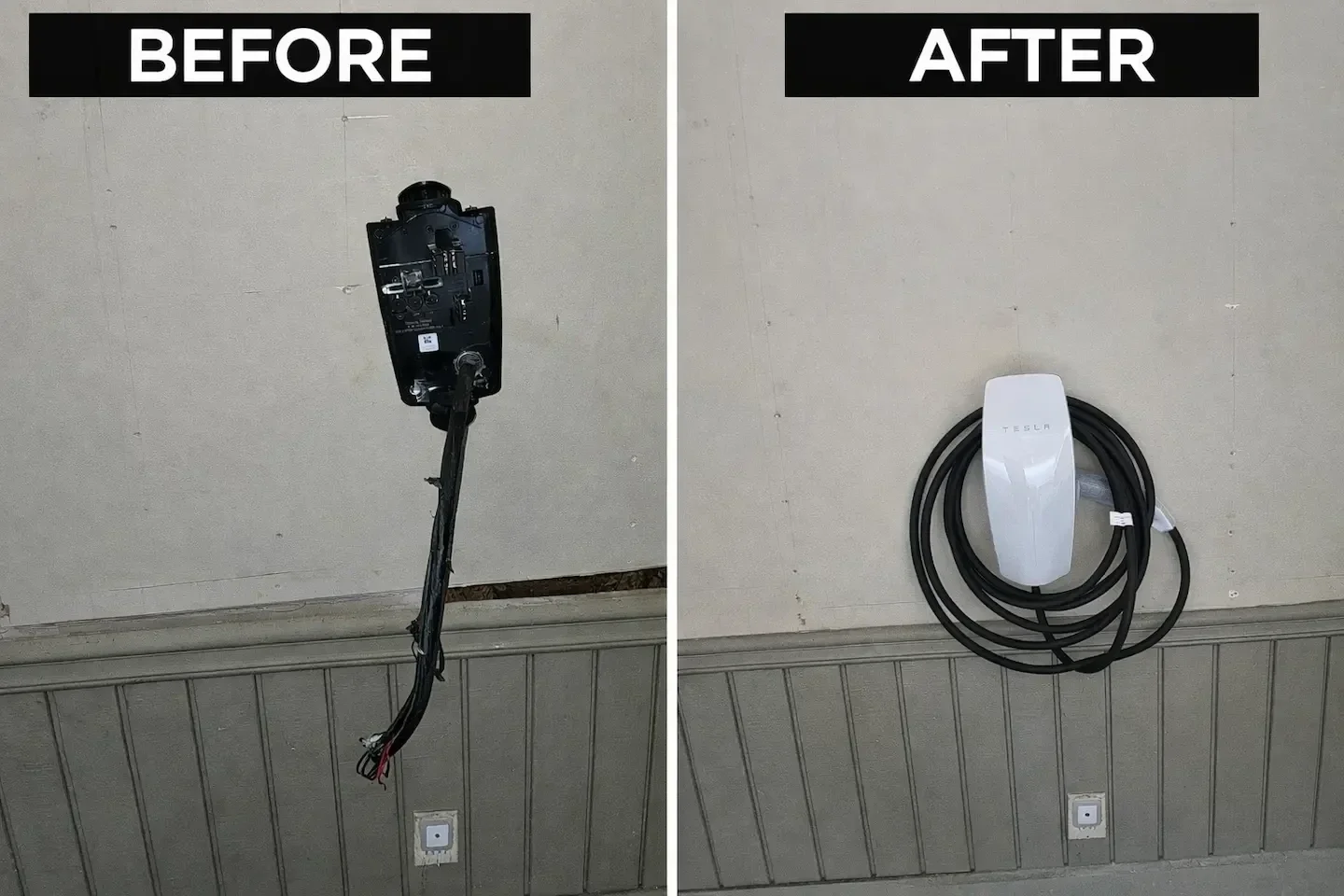
Loganville Homeowner Upgraded From Slow 120V Charging to a Level 2 Tesla Wall Connector

This homeowner already had the Tesla Wall Connector and wanted faster home charging. They were using a standard 120V charger, but it did not charge the vehicle fast enough for daily use. The question was not simply “50 amp or 60 amp?” The real question was whether the home and installation could support the charging goal safely.

Tesla Wall Connector before and after installation in garage by Kais Pro Repairs
Installer’s Breakdown

60 Amp Tesla Wall Connector Installed for Faster Overnight Charging

  • The electrical panel had physical breaker space, but a load review was still performed before selecting the final circuit size.
  • The panel passed the load review, so a 60 amp circuit was selected for the homeowner’s charging goal.
  • The circuit ran about 50 feet from the basement panel up to the garage.
  • The installation used #6 conductors in conduit, with a mix of surface-mounted conduit and wiring hidden inside finished wall areas.
  • The Tesla Wall Connector was configured and tested after installation.

The result was a clean Level 2 charging setup that fit the homeowner’s need for faster overnight charging and less reliance on public chargers.

Proof of Expert EV Charger Installation

EV Charger Installations Built Around Real Homeowner Problems

A good EV charger installation starts with the problem the homeowner is actually trying to solve: slow 120V charging, uncertainty about 50 amp versus 60 amp circuits, panel capacity concerns, charger placement, clean routing, or a charger that keeps tripping after a poor setup. Kais Pro Repairs uses real field experience to plan the circuit, check the panel, explain the options, and leave the installation looking clean when finished.

Fed Up With Waiting at Public Chargers?

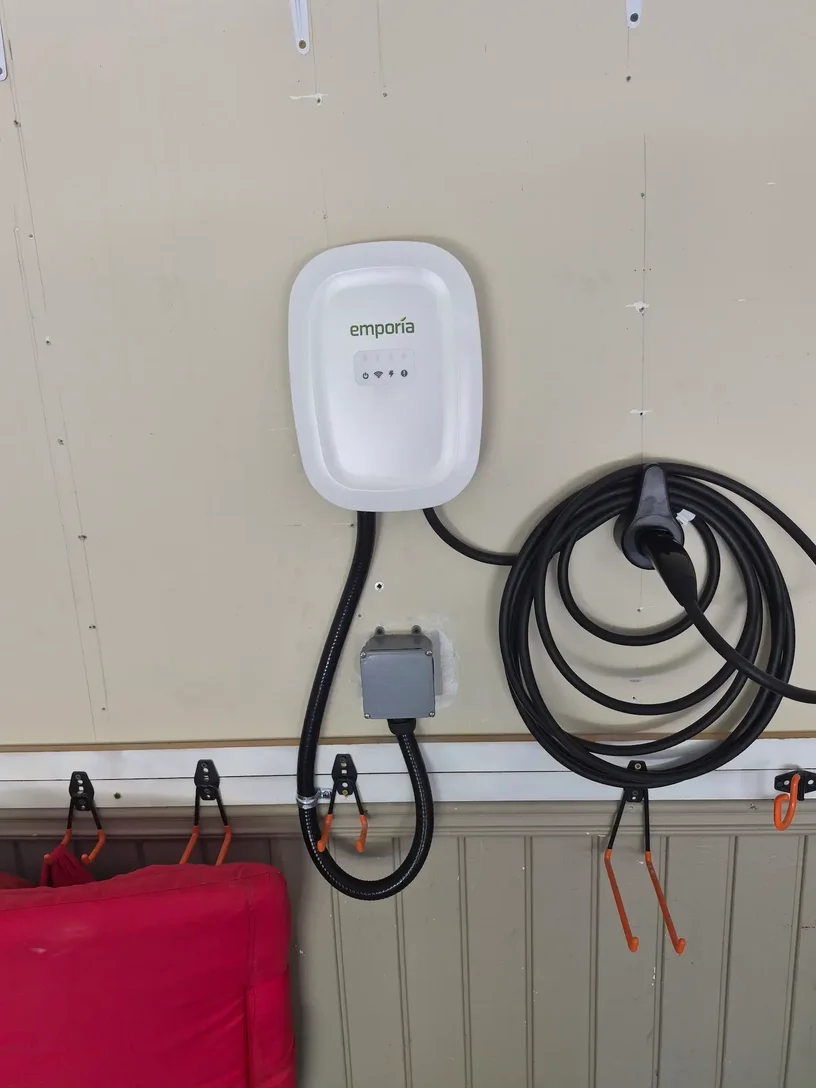
Emporia EV Charger Installed for Home Charging

A Grayson homeowner needed a dependable home charging setup instead of relying only on public charging. Kais Pro Repairs installed an Emporia charger and planned the circuit around the panel, breaker space, wire route, charger location, and charging needs.

View recent job photos

Looking for a More Flexible Charging Setup?

Hardwired vs Plug In Decision

One homeowner wanted flexibility and easier charger replacement in the future, while another wanted a cleaner permanent high-output setup. That is the point: the best EV charger setup depends on the home and the homeowner’s goals.

Read hardwired vs plug in

Is Your Charger Giving You Trouble?

Blue Then Red Charger Faults

When a charger powers up, turns blue, clicks, then flashes red, the problem may be in the charger, wiring, breaker, ground fault detection, settings, or the vehicle itself. The right answer comes from diagnosis, not guessing.

Troubleshoot not charging issues

DIY Warning

Why EV Charger Installation Is Not the Place to Guess

EV chargers are continuous high-demand electrical loads. A circuit can look simple from the outside, but the wrong breaker, wrong wire, weak receptacle, bonded neutral and ground in a subpanel, or skipped load calculation can create nuisance tripping, overheating, and unsafe charging conditions.

“It fits in the panel” does not mean the panel can safely handle it. Kais Pro Repairs checks the charger requirements, home electrical load, panel condition, circuit route, conductor size, and final charger settings before treating the job as safe.

Common EV charger mistakes we help homeowners avoid

  • Installing a 50 amp or 60 amp circuit without a load calculation.
  • Using the wrong wire size or wiring method for the charger output.
  • Bonding neutral and ground in a subpanel, which can make sensitive EV equipment trip.
  • Using an old dryer outlet without checking receptacle quality, wire size, and terminations.
  • Leaving loose connections that can heat up during long charging sessions.
  • Setting the charger output higher than the circuit can safely support.

Read the EV charger breaker troubleshooting guide

Our Process

The EV Charger Install Process That Prevents Expensive Mistakes

A strong EV charger installation is planned before wire is pulled. We look at the full electrical picture, explain the options, and leave the homeowner with a clean setup that matches the charger and vehicle.

Review the Charger and Vehicle

We identify the charger model, maximum output, connector type, manufacturer requirements, and whether the vehicle can use the charging speed the homeowner wants.

Check the Panel and Load

We look at panel condition, breaker space, existing loads, and whether the home can support the added EV charging demand.

Plan the Circuit Route

We evaluate the route from the panel to the garage or driveway, including unfinished areas, finished walls, conduit, access points, and clean mounting.

Choose the Correct Setup

We compare hardwired vs plug in, 50 amp vs 60 amp, wire method, breaker size, and charger settings based on the actual installation.

Install Cleanly

We route the wiring neatly, support the wiring properly, mount the charger at a practical location, and label the circuit where appropriate.

Configure and Test

We set the charger output where required, verify operation, check the charging session, and explain what the homeowner should watch for.

Decision Section

50 Amp vs 60 Amp, Hardwired vs Plug In, Panel Upgrade or No Panel Upgrade

This is where many homeowners get stuck. The best choice depends on charger capability, vehicle charging limit, panel capacity, installation method, route distance, and whether the homeowner values maximum output or future flexibility.

Decision When It May Make Sense What Must Be Checked First
50 amp circuit Good fit for many homeowners who want reliable overnight charging without pushing the panel harder than necessary. Charger settings, wire size, breaker type, route distance, receptacle or hardwire method, and panel capacity.
60 amp circuit Strong option when the charger can use higher output, the panel can support the load, and the homeowner wants the fastest practical home setup. Load review, conductor size, wiring method, charger terminal rating, manufacturer instructions, and panel condition.
Hardwired charger Best for many permanent Level 2 setups, cleaner appearance, fewer plug/receptacle heat points, and higher-output charger configurations. Charger requirements, disconnect requirements where applicable, mounting location, circuit size, and panel support.
Plug in charger outlet Useful when the homeowner values flexibility, wants easier charger replacement, or may move the charger later. Receptacle quality, torque, wire size, breaker size, continuous load requirements, and whether the outlet is truly suitable for EV charging.
Panel upgrade or correction Needed when the panel is overloaded, damaged, outdated, full, improperly configured, or not suitable for the added EV load. Panel rating, available capacity, existing high-demand loads, breaker condition, wiring condition, and future electrical plans.
EV Charger Images

EV Charger Photos and Electrical Planning Images

These images support the page with proof and help homeowners understand that EV charger installation includes more than the charger itself. The panel, route, wiring method, receptacle choice, and final setup all matter.

Our Pricing Guide

What Affects the Cost of EV Charger Installation?

EV charger installation pricing depends on the actual home. A short garage install is not the same as a 50-foot basement-to-garage run through finished and unfinished areas. That is why Kais Pro Repairs starts with the panel, the charger, the route, and the homeowner’s charging goals before giving a quote.

Panel and Load Conditions

Breaker space, panel rating, existing electrical loads, panel condition, and whether the home can support a 50 amp or 60 amp charger all affect the final approach.

Route and Access

Distance from the panel to the charger, basement access, attic access, finished walls, crawlspace, garage layout, exterior conduit, and drywall access can change the labor and material needs.

Charger Setup

Hardwired vs plug-in, Tesla Wall Connector settings, charger mounting location, conduit needs, wire size, and whether the charger is already purchased all matter.

Best first step: free EV charger quote with panel inspection

Send photos of your electrical panel, the charger you bought, and the location where you want it installed. We can start the conversation with the right questions instead of guessing on price from one picture.

Problems We Help Prevent

Bad EV Charger Installs Usually Fail the Same Way

A poor EV charger installation may work for a little while, then start tripping, heating, faulting, or refusing to charge once the system is under load.

Call before guessing if you see these symptoms

  • EV charger turns blue, clicks, then flashes red.
  • Breaker trips when charging starts.
  • Charger powers on but does not deliver a charge.
  • Outlet, plug, or breaker feels warm or smells burnt.
  • Charger works for one vehicle but not another.
  • Panel has open breaker space but may not have enough available capacity.

Read the EV charger breaker troubleshooting page

Local Service Area

EV Charger Installation Near Loganville, GA

Kais Pro Repairs installs and troubleshoots residential EV chargers in Loganville first, with supporting service coverage for Grayson, Snellville, Lawrenceville, Monroe, Between, Gwinnett County, and Walton County.

Homeowner Questions

EV Charger Installation Questions Homeowners Ask Before Scheduling

These are visible page questions only. No structured question schema is included in this file.

Not automatically either one. A 50 amp circuit may be enough for many homeowners. A 60 amp circuit may make sense when the charger can use it, the vehicle can benefit from it, the wire method is correct, and the panel can support the added load.

Hardwired is often cleaner and stronger for permanent higher-output setups. Plug in can make sense when flexibility matters. The right choice depends on the charger, amperage, panel capacity, outlet quality, location, and homeowner goals.

Do not assume that. A dryer outlet may have worn contacts, loose terminations, the wrong wiring method, or may not be suitable for long-duration EV charging. Have it inspected before using it for an EV charger.

Yes, in the right setup. Connector compatibility, adapter rating, Tesla Universal Wall Connector options, vehicle requirements, breaker size, wire size, panel capacity, and charger settings must all be considered.

That can point to a weak breaker, poor termination, damaged wiring, incorrect breaker size, panel limitation, ground fault condition, charger setting problem, or a vehicle-side issue. The circuit needs structured testing under load.

Cost depends on panel location, route distance, amperage, hardwired vs plug in setup, wall access, conduit needs, charger type, and whether the panel needs correction or added capacity. Text panel and charger photos for a better estimate conversation.

Yes. Kais Pro Repairs offers a free EV charger quote with panel inspection so the charger, breaker size, wire route, and panel capacity are reviewed before the installation is planned.

We serve Loganville, Grayson, Snellville, Lawrenceville, Monroe, Between, Gwinnett County, Walton County, and nearby communities.

Schedule Your EV Charger Estimate

Get a Free EV Charger Quote With Panel Inspection Before You Guess on Breaker Size

We will help you choose a setup that fits your charger, panel, home layout, and charging goals. Tesla Wall Connector, Level 2 charger, Emporia charger, 50 amp circuit, 60 amp circuit, hardwired setup, EV outlet, panel check, or charger troubleshooting — start with the right evaluation.