

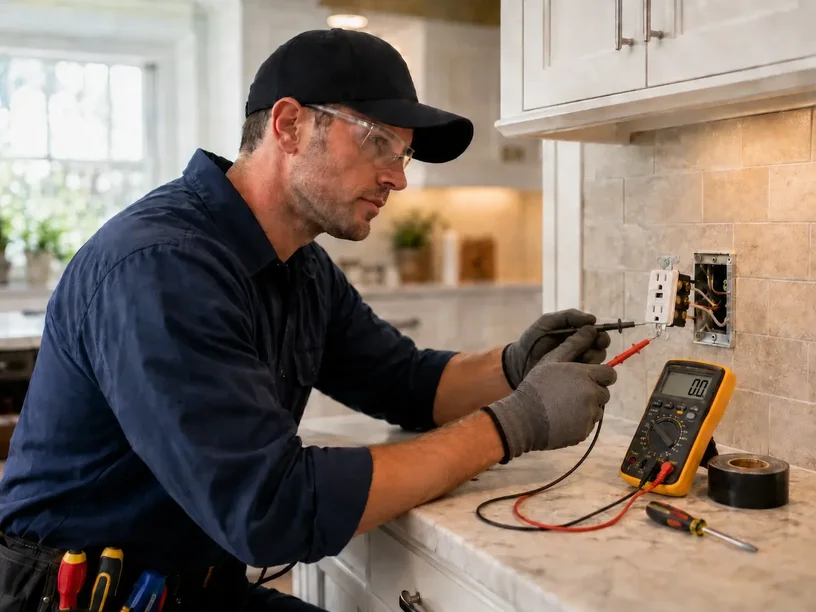
Why a 15 Amp AFCI Breaker Kept Tripping in a Second Floor Bedroom
A newly purchased Grayson home had a 15 amp AFCI breaker that tripped immediately. The cause was not a bad breaker. It was a loose backstab outlet connection hiding behind the wall.
A Breaker That Trips Immediately Is Trying to Tell You Something
A tripping breaker is one of those problems homeowners often try to reset and ignore. But when a breaker trips immediately, especially when nothing is plugged in, the circuit needs real troubleshooting. That was exactly the situation on a recent electrical repair call in Grayson, GA.
The homeowner had recently purchased the house. One of the second floor bedroom circuits was protected by a 15 amp AFCI breaker, and the breaker would not stay on. Every time it was reset, it tripped immediately. Nothing was plugged into the affected bedroom outlet, so this was not a case of too many devices pulling power.
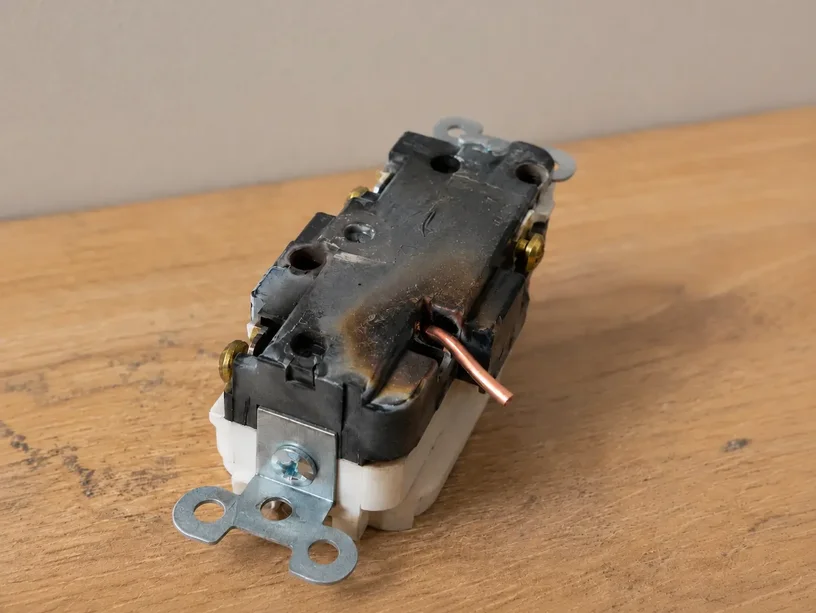
After troubleshooting the circuit and narrowing the fault down by disconnecting sections of the wiring, we found the real cause: a loose backstab connection at a bedroom outlet. The back of the outlet showed discoloration from heat. We replaced the outlet, removed the backstab connection, reconnected the wires using the screw terminals, and the breaker stopped tripping.
The important lesson: a breaker that trips immediately with nothing plugged in is usually not something to keep resetting. It may be warning you about a hidden wiring problem inside the outlet box, switch box, junction box, or branch circuit.
The Call: A Newly Purchased Home With a Bedroom Circuit That Would Not Stay On
The homeowner had recently purchased the house and started noticing an electrical issue on the second floor. The bedroom breaker would trip as soon as it was reset. Since the affected circuit was a bedroom circuit, the breaker was an AFCI breaker.
Many homeowners hear “breaker keeps tripping” and immediately think the breaker is bad. Sometimes breakers do fail, but replacing a breaker without checking the circuit is guessing. In this case, the AFCI breaker was doing its job. It was reacting to a problem on the circuit.
The key detail was this: nothing was plugged into the outlet. That helped point the diagnosis away from an overloaded circuit and toward a wiring fault, loose connection, damaged device, arc fault condition, or ground fault condition.
Why an AFCI Breaker Trips Even When Nothing Is Plugged In
A standard breaker mainly protects against overloads and short circuits. An AFCI breaker does more. AFCI stands for Arc Fault Circuit Interrupter. It is designed to detect certain arcing conditions that can happen when wiring, cords, outlets, or connections become damaged or loose.
That matters because a loose connection behind an outlet can create heat and arcing before the homeowner ever sees a major visible problem. The room may look normal. The outlet may look normal from the front. But behind the device, the connection may be weak enough to cause the breaker to trip.
In this Grayson repair, the breaker was not randomly nuisance tripping. It was reacting immediately because there was a real problem on the branch circuit.
The Problem Was Hidden Behind the Bedroom Outlet
Once we began troubleshooting, the goal was to stop guessing and isolate the fault. We narrowed the problem down by disconnecting sections of the circuit until the bad section was identified. The issue was found at a bedroom outlet.
The conductors had been pushed into the back of the receptacle using the backstab holes. Over time, that connection became loose. A loose connection can create heat. Heat can discolor the device, weaken the contact point, and cause the AFCI breaker to trip.
The back of the outlet showed discoloration. That was enough reason not to reuse it. Once a receptacle shows heat damage, I do not treat it like a normal device anymore. The safer repair is to replace it and make the connection properly.
What Is a Backstab Outlet Connection?
A backstab connection is when the wire is pushed into a small hole in the back of the outlet instead of being wrapped and tightened under the side screw terminal. It is common in many homes because it is fast.
The problem is that fast is not always better. A backstab connection relies on an internal spring contact inside the receptacle. If that contact weakens, loosens, overheats, or loses tension, the connection can become unreliable.
A properly made screw terminal connection gives the conductor a stronger mechanical hold. When I troubleshoot outlets that are causing AFCI trips, burnt smells, flickering, or dead outlet problems, backstabbed connections are one of the first things I want to inspect.
Important: this does not mean every backstabbed outlet in every home is actively failing. But if an AFCI breaker trips immediately and the back of the outlet shows discoloration, that outlet has already given you a warning sign.
Why This Was Not Just a Bad Breaker
The fastest way to do the job wrong would have been to replace the AFCI breaker first and assume the problem was solved. That would not have fixed this home.
The actual fault was downstream at the bedroom outlet. The loose connection was the failure point. The AFCI breaker was simply responding to the problem. If we had replaced only the breaker, the bad outlet connection would still have been sitting inside the wall.
This is why electrical repair needs a troubleshooting mindset. A tripping breaker is not always the defective part. Many times, it is the alarm telling you to look deeper.
How We Troubleshot the Circuit
On a breaker that trips immediately with nothing plugged in, you have to break the problem down in a controlled way. The goal is to find whether the problem is at the breaker, in the wiring, at a device, or somewhere along the circuit.
Confirmed the symptom
The 15 amp AFCI breaker tripped immediately after reset, even with nothing plugged into the bedroom outlet.
Ruled out a simple overload
Because no load was connected, the issue was not caused by too many devices being used on the circuit.
Isolated sections of the circuit
Sections of the circuit were disconnected and tested so the problem area could be narrowed down instead of guessed at.
Found the bad bedroom outlet
The issue was located at a bedroom outlet where a backstab connection had become loose and the device showed discoloration.
Repaired the failure point
The damaged outlet was replaced, and the conductors were reconnected using the screw terminals instead of backstab holes.
The Fix: Replace the Outlet and Use the Screw Terminals
Once the bad outlet was found, the repair was straightforward but important. We replaced the discolored receptacle and removed the backstab wiring method from that failure point. The conductors were reconnected using the screw terminals on the new outlet.
After the new outlet was installed and the wiring was properly terminated, the 15 amp AFCI breaker held. The circuit was restored because the actual cause had been corrected.
Warning Signs Homeowners Should Not Ignore
Call an electrician if you notice any of these signs:
- A breaker trips immediately after you reset it
- A breaker trips even when nothing is plugged in
- A bedroom, living room, or hallway circuit loses power repeatedly
- An outlet feels warm to the touch
- The outlet, plug, or wall plate has discoloration
- You smell something hot, burnt, or electrical near an outlet or switch
- Lights flicker when devices turn on
- You hear buzzing, crackling, or sizzling near an outlet
- An AFCI or GFCI breaker keeps tripping with no obvious cause
Do not keep resetting the breaker over and over. If a loose connection is creating heat or arcing, repeated resets can make the condition worse.
Why New Homeowners Should Take Tripping Breakers Seriously
This repair is a common example of what can happen after someone buys a house. During the showing, everything may look normal. During the inspection, some electrical issues may not reveal themselves. Then, after moving in, a breaker starts tripping and the homeowner realizes there is a hidden problem.
A loose outlet connection can stay hidden until it becomes severe enough to trip a breaker. A backstab connection can look fine from the front of the outlet. The real condition is behind the device, inside the electrical box.
If you recently purchased a house in Grayson, Loganville, Snellville, Lawrenceville, Monroe, Walton County, or Gwinnett County, and you have a breaker that keeps tripping, get it checked before it becomes a larger repair.
Why Kais Pro Repairs Troubleshoots Before Replacing Parts
At Kais Pro Repairs, we focus on finding the actual cause of the problem. We do not want to replace a breaker, collect a payment, and leave a dangerous loose connection behind the wall.
For a tripping breaker call, the correct repair may involve checking the breaker type, identifying what the circuit controls, removing loads from the circuit, opening outlets and switches, checking for loose terminations, isolating sections of the branch circuit, and repairing the failure point.
That is the difference between guessing and troubleshooting.
Electrical Repair Services Related to This Problem
If you are dealing with a similar issue, these are the types of electrical repairs that may be needed:
- Circuit breaker troubleshooting and repair
- Electrical troubleshooting and repair
- Outlet and switch repair
- Emergency electrical service
- Electrical services in Grayson, GA
We also help homeowners looking for an electrician in Loganville, electrician in Snellville, and electrical repair service throughout nearby Gwinnett and Walton County communities.
Common Questions About AFCI Breakers and Loose Outlet Connections
Why does my 15 amp AFCI breaker trip immediately?
If a 15 amp AFCI breaker trips immediately, the problem may be a loose connection, damaged outlet, wiring fault, arc fault condition, ground fault condition, or a defect somewhere on the branch circuit. If nothing is plugged in, the problem is likely inside the circuit instead of from an appliance or device.
Can a loose outlet connection trip an AFCI breaker?
Yes. A loose outlet connection can create heat or arcing conditions that may cause an AFCI breaker to trip. In this Grayson case, the loose backstab connection at the bedroom outlet was the root cause.
Does a tripping AFCI breaker mean the breaker is bad?
Not always. Sometimes a breaker can fail, but many AFCI trips are caused by wiring or device problems downstream. The circuit should be troubleshot before assuming the breaker is the problem.
Should I keep resetting a breaker that trips immediately?
No. If a breaker trips immediately, stop resetting it repeatedly. The breaker may be warning you about a hidden wiring fault. Have the circuit checked so the root cause can be found and repaired.
Need Help With a Breaker That Keeps Tripping?
If your AFCI breaker trips immediately, your bedroom outlet lost power, or you recently purchased a home and discovered electrical problems, call Kais Pro Repairs. We provide electrical troubleshooting, outlet repair, circuit breaker repair, and residential electrical repairs in Grayson, Loganville, Snellville, Lawrenceville, Monroe, Gwinnett County, and Walton County.
Call Kais Pro Repairs for a free electrical repair estimate.